President Biden Meets With Ukrainian Refugees

President Biden on March 26 met with Ukrainian refugees “who have fled to Poland in recent weeks, getting a firsthand look at the humanitarian crisis sparked by Russia’s invasion of Ukraine,” the Hill reported.

Biden “held hands with parents and gave them hugs during the stop at a soccer stadium where refugees go to obtain a Polish identification number that gives them access to social services such as health care and schools,” the Associated Press noted.

Photo by Doug Mills/The New York Times

“I’ve been to an awful lot of places like this with a lot of refugee camps in my life. And what I — what I never — I’m always surprised by is the depth and strength of the human spirit. I mean it sincerely. And it’s incredible. It’s incredible,” the President said after meeting with the refugees.

U.S. To Admit Up To 100,000 Refugees From Ukraine

The White House on March 24 said that it would welcome up to 100,000 Ukrainians and others “fleeing Russia’s aggression through the full range of legal pathways, including the U.S. Refugee Admissions Program.”

The White House said in a fact sheet that in particular, “we are working to expand and develop new programs with a focus on welcoming Ukrainians who have family members in the United States. The United States and the European Union are also coordinating closely to ensure that these efforts, and other forms of humanitarian admission or transfers, are complementary and provide much-needed support to Ukraine’s neighbors.”

“While most displaced Ukrainians want to stay in Europe, the U.S. government expects to use its refugee admission program as well as the parole system and immigrant and non-immigrant visas to bring in Ukrainians,” NPR reported, citing a senior Biden Administration official.

Along with accepting the up to 100,000 refugees, the White House also said that Thursday that it would donate $1 billion to help European countries handle a surge of migrants fleeing Russia’s invasion, the New York Times reported.

“The announcement comes as countries facing an exodus of some three million refugees have sought assistance from the United States, which has been engaged in its own struggle to absorb thousands of refugees from the war in Afghanistan,: wrote New York Times reporters Miriam Jordan and Michael Shear.

Hello Neighbor Founder Reflects On Five Years Of Helping Refugees

In a Q&A with Forbes, Sloane Davidson, founder of the refugee support group Hello Neighbor, reflects on the five year anniversary of the organization’s founding.

“The nonprofit marks several huge milestones this year with their five year anniversary, a federal government contract that enables them to directly resettle refugees upon arrival into the U.S., and securing over a million dollars in funding,” writes Amy Shoental of Forbes.

Davidson highlighted Hello Neighbor’s focus on storytelling for refugees.

“We have found really impactful ways to tell positive stories through our core values: a refugee first mindset, dignified storytelling and cultivating community,” she said in the interview.

Additional information about Hello Neighbor is available here.

UN Report Details Increase In Forced Migration

By November 2021, more than 84 million people had been forced from their homes, according to data from the UNHCR, the refugee agency of the United Nations. This figure is an increase from 2020 and 2019, both of which were record-breaking years in terms of the numbers forcibly displaced around the world.

This rise was coupled with a drop in global mobility overall due to stricter travel rules, prompting the Director General of the UN migration agency, António Vitorino, to declare that the world was “witnessing a paradox not seen before in human history.”

“While billions of people have been effectively grounded by COVID-19, tens of millions of others have been displaced within their own countries,” he said, at the launch of the agency’s latest World Migration Report.

The young are at forefront of global migration surge: L.A. Times

The young are at the forefront of the global migration currently underway, reports Patrick McDonnell and Nabih Bulos in the Los Angeles Times.

“They are converging on the U.S. border and on multiple entry points to Europe, from the English Channel to the Mediterranean to the continent’s eastern flanks. Many hail from regions with predominantly youthful populations, median ages typically in the low 20s, well below those in Western Europe and the United States,” the story notes.

Almost 80% of more than 5.5 million first-time asylum seekers in Europe since 2014 were 34 or younger, according to Eurostat, the statistical branch of the European Union. Close to one-third were under 18, the story notes.

New Yorker article sheds light on inhumane conditions that migrants face in Libyan prisons

A recent article published in the New Yorker sheds light on the inhumane conditions that migrants from Africa are facing in Libyan prisons.

“In the past six years, the European Union, weary of the financial and political costs of receiving migrants from sub-Saharan Africa, has created a shadow immigration system that stops them before they reach Europe,” writes Ian Urbina.

International aid agencies have documented an array of abuses,Urbina reports, including detainees tortured with electric shocks, families extorted for ransom and men and women sold into forced labor.

“The E.U. did something they carefully considered and planned for many years,” Salah Marghani, Libya’s Minister of Justice from 2012 to 2014, told Urbina. “Create a hellhole in Libya, with the idea of deterring people from heading to Europe.”

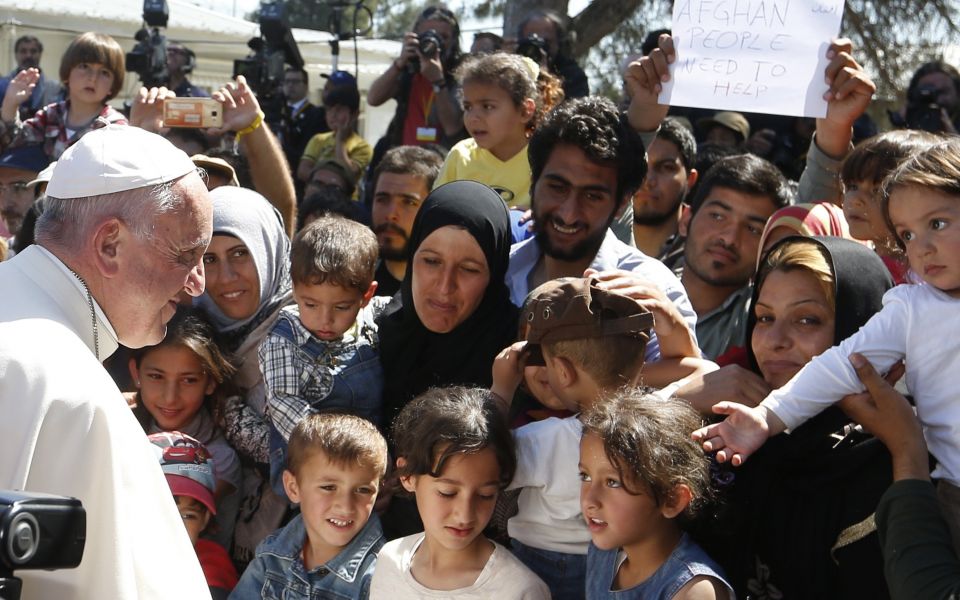
Pope spends 85th birthday greeting new refugee arrivals to Italy

Pope Francis marked his 85th birthday on Dec. 17 by meeting with 10 refugees who arrived in Italy from Cyprus on Dec. 16, the National Catholic Reporter notes in an article.

A communique from the Holy See Press Office said the migrants from the Democratic Republic of Congo, Cameroon, Somalia and Syria will be supported directly by Francis. The international Community of Sant’Egidio will be responsible for their integration program, which will take a year. 

Refugees Face Housing Crisis

As Afghan refugees are released from U.S. military bases “to start rebuilding their lives in the United States, they are bumping up against an unexpected obstacle: the housing crisis,” reports Miriam Jordan in the New York Times.

“Resettlement agencies have been scrambling to find rentals in cities like Los Angeles, Phoenix and St. Louis as well in towns like Owensboro and Reno, Nev., where lease properties are in short supply, expensive or both. The coronavirus pandemic, complaints of discrimination and the sheer number of newly arriving Afghans have also posed challenges,” Jordan notes.

According to the article, as of Monday, more than 40,000 Afghans had completed their processing and departed for new homes, while another 30,000 remained on seven military bases “that the government hopes to empty as soon as possible.”

For months, Afghan evacuees have been living in temporary camps on U.S. military bases. “Now, as they move into permanent homes, some will be heading to communities with long histories of offering refuge to people fleeing danger. But not necessarily to the bustling and multicultural cities you may imagine,” National Geographic notes in a recent article about refugee resettlement in the U.S.

“In small town America, refugee resettlement programs have won over residents by reversing population declines and replenishing shrinking labor pools, data show. Religious traditions that encourage care for foreigners, as well as close-knit communities, have proved conducive to forming neighborly bonds,” reports Nina Strochlic in her article.

Meeting to assess Global Refugee Forum’s progress

The first follow-up to the Global Refugee Forum starts Dec. 14. The meeting, a two-day virtual event, will bring together senior government officials, refugees and various stakeholders, to take stock of progress on how the world responds to refugee situations.

UNHCR, the UN Refugee Agency, is co-hosting the meeting together with Switzerland. It will be opened by the President-elect of the Swiss Confederation, Ignazio Cassis and the UN High Commissioner for Refugees, Filippo Grandi.

The meeting is one of the main vehicles for follow-up and review under the Global Compact on Refugees. Under the Compact, Global Refugee Forums are to be held every four years while the High-Level Officials Meeting are to be held two years later from each Forum.

Additional information about the Global Refugee Forum is available here.